HOA Karen Mocked Her Hanging Melons—Then Saw the Harvest
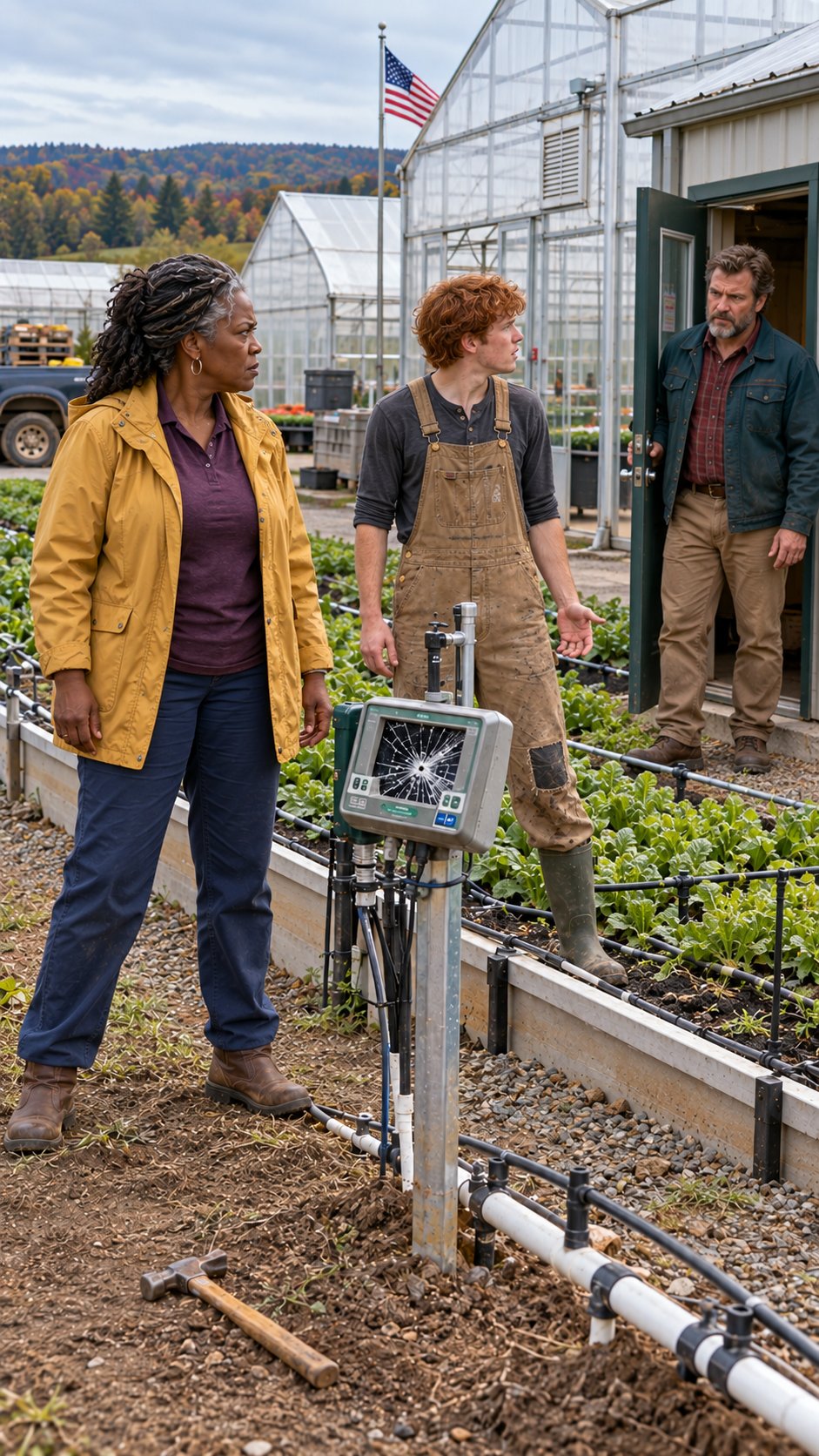
The first melon swung less than a foot from Denise Harper's face.
Not because it fell.
Because Denise had just grabbed one of the trellis supports with both hands and yanked it loose from the soil.
CRACK.
The wooden brace shifted.
The upper cable snapped sideways.
Six young melons swung violently in their fabric slings.
I dropped the pruning shears in my hand.
“STOP!”
Denise laughed.
Behind her, three neighbors laughed too.
She pointed at the tilted frame.
“MELONS DON'T GROW IN THE AIR!”
One of the men beside her slapped his thigh.
He pointed at the strips of fabric cradling the developing fruit.
“SHE MADE HAMMOCKS FOR FRUIT!”
More laughter.
I ran forward and shoved the support back into place before the entire trellis could lean farther.
One melon swung into my shoulder.
Another twisted its vine around the support cable.
“Don't touch this!”
Denise folded her arms.
I pushed my boot against the bottom of the support and forced it upright.
“They keep the fruit off the ground.”
Denise scoffed.
“You're eighteen, Brooke. Watching gardening videos doesn't make you a farmer.”
I looked at her.
“No.”
Then I tightened my grip on the support.
“Actually growing food does.”
Her smile disappeared for half a second.
Then she looked across my rows of vertical melon vines and laughed again.
“Give it a month.”
She turned toward the neighbors.
“This whole thing will collapse.”
Nobody behind her disagreed.
I looked at the damaged support.
Then at the young melons swinging above the soil.
What Denise didn't know was that I'd already been giving the project a month.
Actually, much longer.
And what none of them understood was that the hanging fruit they were laughing at wasn't the experiment.
The experiment was whether I could make every part of the system work together.
The trellis.
The varieties.
The irrigation.
The pruning.
The slings.
The soil.
The spacing.
And now—
thanks to Denise—
load strength.
Six weeks later, she came back.
This time, she didn't laugh.
She stood at the edge of the same field staring at row after row of mature vines climbing reinforced trellises.
Dozens of melons hung safely above the soil.
And I was loading the last layer into a harvest cart already filled nearly to the rails.
Denise looked at the cart.
Then at the melons.
Then at me.
Nobody behind her said a word.
But that morning didn't begin with the harvest.
It began with the reason an eighteen-year-old girl was trying to grow melons in the air in the first place.
My name is Brooke Ellis.
At eighteen, I lived with my father on twenty-three acres outside Columbia, South Carolina.
Calling all twenty-three acres a farm would've been generous.
About nine acres were workable.
Five were woods.
Three stayed too wet after heavy rain.
The house, barn, driveway, equipment shed, drainage area, and old pasture took most of the rest.
My grandfather had bought the property in 1989.
Back then, the nearest subdivision was miles away.
By the time I was seventeen, suburban development had crept toward us from three directions.
The newest development was called Magnolia Ridge.
And that was where Denise Harper lived.
Magnolia Ridge was one of those neighborhoods designed to look older than it was.
Brick entrance columns.
Decorative streetlights.
Matching mailboxes.
Young oak trees planted at mathematically perfect intervals.
The developer had purchased land bordering the eastern side of our property.
Our farm remained separate.
That distinction would become important.
Very important.
But Denise didn't seem interested in distinctions.
She was president of the Magnolia Ridge Homeowners Association.
And in her mind, anything visible from Magnolia Ridge was apparently Magnolia Ridge business.
Including us.
The problems started before the melons.
Our tractor was “too loud.”
Our compost pile was “unsightly.”
Our produce trailer looked “commercial.”
Our irrigation tank was “industrial.”
Once Denise emailed my father because a stack of empty harvest crates could be seen from the walking path behind six HOA homes.
Dad read the email at breakfast.
Then looked out the window.
Then back at the email.
“Is she serious?”
I shrugged.
“She used three exclamation points.”
“That answers my question.”
He deleted it.
Dad's name was Aaron Ellis.
Forty-seven.
He'd grown up on the property.
He wasn't sentimental about farming.
That surprised people.
Dad didn't talk about “the land” like it was sacred.
He talked about numbers.
Input costs.
Labor.
Equipment.
Weather.
Market price.
Insurance.
Yield.
He loved farming.
But he respected arithmetic more than nostalgia.
And the arithmetic had been getting worse.
Three years earlier, we'd grown almost two acres of melons.
Mostly cantaloupe and smaller specialty watermelons.
The crop wasn't terrible.
But ground-grown fruit created problems.
Fruit sitting directly on wet soil developed blemishes.
Heavy rain increased disease pressure.
Vines spread everywhere.
Harvesting required a lot of bending and searching.
Animals damaged some fruit.
A wet season could turn clean rows into a muddy mess.
None of those problems were unique to us.
They were farming.
But Dad had started reducing melon acreage because the return wasn't worth the labor.
I hated that.
Melons were my favorite crop.
When I was seventeen, I started experimenting.
Not because I believed I'd discovered something new.
I hadn't.
Gardeners and growers had trained cucurbits vertically for a long time, particularly smaller-fruited varieties.
I'd seen trellised cucumbers everywhere.
Smaller melons weren't conceptually that different.
The challenge was scale.
A backyard gardener might support three vines.
I wanted rows.
And rows create different problems.
Weight.
Wind.
Labor.
Cost.
I needed to know whether vertical production could make sense for our particular situation.
Dad gave me a test plot.
Not an acre.
Not even half.
A narrow strip near the barn.
“You get this.”
I looked at it.
“That's tiny.”
“Correct.”
“How am I supposed to prove anything with that?”
“By not losing much money when you're wrong.”
That was Dad.
I spent that winter reading.
Extension publications.
University trial reports.
Grower forums.
Seed catalogs.
Trellising guides.
I talked to two market gardeners.
I emailed an extension horticulture agent.
I learned quickly that the internet made vertical melons look easier than they were.
Beautiful photograph:
melon hanging in sling.
What the photograph didn't show:
trellis engineering.
Variety selection.
Pruning labor.
Irrigation.
Wind load.
Disease management.
Fruit weight.
Harvest timing.
The time required to train vines.
Or the fact that not every melon belonged six feet above the ground.
I selected smaller-fruited varieties first.
That was deliberate.
I wasn't trying to suspend thirty-pound watermelons from decorative garden netting.
Most of my test fruit would mature in a range the system could reasonably support.
I built heavy end posts.
Intermediate supports.
High-tensile wire.
Vertical netting.
Then I tested several sling materials.
Old T-shirts looked ridiculous but worked surprisingly well.
Commercial mesh produced better airflow.
Wide fabric strips distributed weight well but held moisture if positioned badly.
I wrote everything down.
Dad teased me.
“You farming or writing a dissertation?”
“Both.”
“Which one pays?”
“Eventually me.”
He laughed.
The first season taught me more from failure than success.
One support leaned after a storm.
Two vines snapped because I trained them too aggressively.
A melon slipped from a badly tied sling.
One variety produced fruit that became too heavy for the setup.
Powdery mildew arrived late.
And vertical growth didn't magically eliminate disease.
It simply changed the environment around the plants.
Air movement improved in some places.
Leaf visibility improved.
Fruit stayed cleaner.
But irrigation and plant health still mattered.
The biggest lesson was simple:
The trellis wasn't the system.
It was one component.
Dad allowed a larger test the following year.
That was the summer I turned eighteen.
And that was the summer Magnolia Ridge noticed.
From the neighborhood walking path, the plot looked strange.
Instead of melon vines sprawling across wide beds, ours climbed.
Green walls.
Leaves.
Yellow flowers.
Developing fruit.
Then fabric slings appeared.
That's when the jokes started.
At first, harmless.
A teenager riding a bike shouted:
“Nice hammocks!”
I waved.
A woman walking a golden retriever asked genuinely:
“Are those melons?”
“Yes.”
“That's cool.”
She took a picture.
No problem.
Then Denise saw them.
Denise Harper was fifty-six.
Tall.
Short blond-gray hair.
Always dressed as though she might unexpectedly be asked to chair a meeting.
She wasn't stupid.
That's important.
It would've been easier if she were.
Denise had worked in property management for years.
She understood budgets.
Contracts.
Rules.
Boards.
She was competent.
Her problem was that competence had convinced her that authority followed her everywhere.
She first approached while I was tying vines.
“Brooke.”
I turned.
“Hi, Mrs. Harper.”
“What is this?”
“Melons.”
“I can see that.”
Good start.
She pointed.
“Why are they on fences?”
“Trellises.”
“Whatever.”
She looked toward Magnolia Ridge.
“These structures are visible from our walking trail.”
“Okay.”
“Several residents have complained.”
“About melons?”
“About the appearance.”
I looked at the vines.
Then at her.
“What appearance?”
She gestured broadly.
“This.”
Extremely specific.
I said:
“This is agricultural property.”
“Your property borders our community.”
“Yes.”
“That means what you do affects our residents.”
“Sometimes.”
“Exactly.”
“That doesn't mean your HOA controls our farm.”
Her face tightened.
“I didn't say that.”
She had.
Just with more words.
Dad appeared from the barn.
Denise changed tone immediately.
“Aaron.”
“Denise.”
“I was explaining the concern.”
“I heard.”
“We'd appreciate some cooperation.”
Dad looked at the trellises.
“What cooperation?”
“Perhaps moving these farther from the property line.”
Dad looked at me.
Then back at Denise.
“They're almost two hundred feet from it.”
“They're still visible.”
“So are your houses.”
I bit my lip.
Denise didn't.
“That's unnecessary.”
Dad nodded.
“So is this conversation.”
She left.
I thought that was the end.
It wasn't.
Two days later, Dad received a letter.
Not from a lawyer.
From the HOA board.
It referenced “visual compatibility” and “agricultural structures visible from common areas.”
Dad read it twice.
Then handed it to me.
“Notice anything?”
“No parcel number.”
“Anything else?”
I looked.
“They call us an adjacent owner.”
“Exactly.”
They knew.
We weren't members.
The letter didn't claim we were.
It simply used official-looking language to request voluntary changes.
Dad wrote back:
We are not subject to Magnolia Ridge covenants. Please direct future property concerns to me rather than my daughter.
Short.
Professional.
Clear.
Denise apparently considered that an invitation to escalate socially instead.
That's how she arrived with three neighbors.
The morning she yanked the support.
I was alone in the test plot.
Dad had gone to pick up irrigation fittings.
A pickup stopped near the farm lane.
Denise got out.
Then Martin Cole.
Sixty-one.
Retired insurance adjuster.
Sheila Warren.
Fifty-two.
Real estate agent.
And Glenn Foster.
Forty-eight.
Owner of a landscaping company.
All Magnolia Ridge residents.
Glenn knew enough about plants to be dangerous.
He looked at the trellises and laughed.
“This is a lot of structure for melons.”
“That's the point.”
“Melons belong on the ground.”
“Some do.”
“All do.”
“No.”
He smiled.
“Eighteen?”
“Yes.”
“Thought so.”
That bothered me more than it should have.
Not disagreement.
Dismissal.
Sheila pointed at a sling.
“Is that fabric?”
“UV-resistant mesh.”
“It's ugly.”
“It isn't decoration.”
Martin laughed.
“What happens when those things get heavy?”
“The sling expands.”
“And the whole fence falls over?”
“Trellis.”
He grinned.
“Sure.”
Denise watched them.
Enjoyed the audience.
Then she said:
“This is exactly what residents have been complaining about.”
I put down my pruning shears.
“You need to leave.”
She looked surprised.
“Excuse me?”
“This is private property.”
“We're discussing an HOA concern.”
“You can discuss it from HOA property.”
Glenn stepped closer to a trellis.
He pushed one intermediate support lightly.
“See? Moves.”
“Don't touch it.”
He laughed.
“I'm barely touching it.”
“Then stop barely touching it.”
Martin chuckled.
Denise looked irritated.
“You need to learn how to speak to adults.”
I stared at her.
“You're on our property touching our equipment.”
“Equipment?”
She laughed.
“This?”
Then she grabbed the brace.
Before I understood what she intended—
she pulled.
Hard.
CRACK.
The brace came partially free.
The frame tilted.
Melons swung.
And the laughter started.
“MELONS DON'T GROW IN THE AIR!”
Glenn pointed.
“SHE MADE HAMMOCKS FOR FRUIT!”
I shoved the support back.
One vine twisted.
Another strained.
I yelled:
“Get away from it!”
Denise's expression changed.
Maybe she finally realized she'd done more than point and laugh.
But pride is powerful.
Instead of apologizing, she doubled down.
“If it can fall because someone touches it, it isn't safe.”
“You didn't touch it.”
I stared at her.
“You yanked it out.”
“Don't exaggerate.”
“I'm not.”
Sheila stopped laughing.
That was the first change.
I pulled out my phone.
Denise immediately said:
“Don't record me.”
“We have cameras.”
Her eyes shifted toward the barn.
We did.
One covered the equipment area and part of the test plot.
Not because of Denise.
We'd had fuel stolen the previous year.
The camera wasn't close enough for perfect audio.
But it didn't need to be.
It had captured the action.
Denise said:
“You're threatening me?”
“No.”
“Then why mention cameras?”
“Because you just damaged farm equipment.”
“It isn't damaged.”
I pointed.
The lower brace had split around one bolt.
A cable attachment was bent.
One vine had partially torn.
The frame was standing because I was physically holding it.
“Looks damaged.”
Nobody laughed.
Dad returned eleven minutes later.
He saw the truck.
The group.
Me holding the trellis.
His face changed.
“What happened?”
I explained.
Denise interrupted twice.
Dad held up one hand.
“Stop.”
She stopped.
He inspected the brace.
Then looked at Denise.
“Did you pull this?”
“I was demonstrating—”
“Did you pull it?”
Silence.
Glenn looked away.
Finally:
“Yes.”
Dad nodded.
“Leave.”
“Aaron—”
“Now.”
No shouting.
Dad rarely shouted.
That made him scarier.
Denise tried one more time.
“You need to understand how this looks to our residents.”
Dad pointed toward the farm lane.
“And you need to understand where your property ends.”
She left.
The others followed.
Glenn was last.
He looked back at the trellis.
Then at me.
“You should reinforce those end posts.”
I stared at him.
He raised both hands.
“Just saying.”
Then left.
I wanted to hate him.
Unfortunately, he wasn't entirely wrong.
The brace Denise damaged had been adequate under normal loading.
But the incident revealed something.
The system had less lateral tolerance than I wanted.
Not because HOA presidents routinely attacked trellises.
Because wind did.
Storms did.
Uneven fruit loading did.
Workers accidentally bumped things.
Farm systems had to survive imperfect conditions.
I hated that Denise had revealed a weakness.
I hated even more that the weakness was real.
Dad helped stabilize the row.
We replaced the split brace.
Then reinforced the end assembly.
He said:
“You okay?”
“I'm furious.”
“Good.”
“Good?”
“Better than quitting.”
“I wasn't going to quit.”
“I know.”
He looked at the trellis.
“Now tell me what this taught you.”
I stared.
“Seriously?”
“Best time.”
I sighed.
“More lateral bracing.”
“What else?”
“Anchor points.”
“What else?”
I hated him.
“Inspect every connection.”
He smiled.
“There you go.”
Then he became serious.
“What Denise did was wrong.”
“I know.”
“Improving this afterward doesn't make her right.”
That mattered.
Because people often confuse those things.
If somebody exposes a weakness through bad behavior, fixing the weakness does not justify the behavior.
Dad understood that.
We reviewed the camera footage.
Clear enough.
Denise grabbing the support.
Pulling.
Frame moving.
Me rushing in.
Dad saved copies.
Then he emailed the HOA management company.
Not Denise.
The professional management company.
He described the incident.
Attached still images.
Requested that HOA representatives not enter our property without permission.
Requested reimbursement for damaged materials.
The dollar amount wasn't dramatic.
Less than two hundred dollars in parts.
Labor wasn't included.
Dad said:
“It's not about getting rich.”
Obviously.
“It creates a record.”
That was the point.
The management company responded the next afternoon.
Professional.
Apologetic.
They clarified that Magnolia Ridge had no enforcement authority over our parcel.
They said board members and residents should not enter neighboring private property to enforce HOA preferences.
They offered to discuss reimbursement.
Denise did not apologize.
Instead, she posted something in a neighborhood Facebook group.
I only saw it because a woman named Hannah, who lived in Magnolia Ridge, sent me a screenshot.
Interesting agricultural experiment happening next door. Hopefully safety and appearance concerns are addressed before these structures become a problem for residents.
No names.
No accusation.
Just implication.
Comments appeared.
Some supported her.
Some didn't.
One:
They're melons, Denise.
Another:
My grandmother grew cantaloupes on trellises 30 years ago.
Another:
Why were HOA people on their farm?
That comment disappeared later.
I don't know who deleted it.
Dad told me not to respond.
I wanted to.
Badly.
“Why?”
“Because your crop is your response.”
“That sounds annoyingly inspirational.”
“It isn't. I'm telling you to work.”
Much more Dad.
So I worked.
The next four weeks were brutal.
Heat.
Humidity.
Thunderstorms.
Vines grew faster than I could train them.
Every morning I inspected ties.
Every afternoon I checked moisture.
I adjusted irrigation because vertically trained plants exposed more leaf area to airflow and sun than the sprawling rows I'd grown before.
I monitored for mildew.
Removed damaged leaves selectively.
Avoided stripping too much canopy.
Retied slings as fruit expanded.
Recorded labor.
That last part mattered.
A beautiful harvest means nothing commercially if producing it requires absurd labor.
I had three comparison areas.
Traditional ground-grown plants.
Vertical plants with basic support.
Vertical plants with reinforced support and standardized slings.
Same general planting window.
Comparable varieties.
Not a perfect scientific trial.
This was a farm test.
But enough to learn.
The vertical rows had advantages.
Fruit visibility was dramatically better.
Harvest checks were faster.
Fruit stayed cleaner.
Some pest inspection was easier.
Air movement through properly managed vines was better.
Walking between rows was easier.
But there were costs.
Trellis materials.
Training time.
Sling labor.
Repair.
And the biggest limitation:
fruit weight.
Some varieties simply didn't make sense for our setup.
I eliminated one from future plans.
Dad loved that decision.
“Why?”
“Because proving something doesn't work is still useful.”
He was right.
Again.
Annoying man.
The damaged vine from Denise's pull survived.
Barely.
One fruit aborted.
Another matured smaller.
I marked that plant with orange tape.
Not for revenge.
Data.
Though maybe five percent revenge.
Two weeks after the incident, an extension agent visited.
Dr. Camille Rhodes.
Forty-nine.
Horticulture specialist.
I'd emailed her months earlier with questions.
She'd been busy during spring.
Now she had time.
She walked the rows with a clipboard.
I expected praise.
Instead, she started finding problems.
Of course.
“This tie is too tight.”
I fixed it.
“Your spacing here is reducing airflow.”
I wrote it down.
“Watch this leaf spot.”
Marked.
“These slings are better.”
“Which?”
“The mesh.”
“Why?”
“Drainage.”
I nodded.
Then she reached the reinforced row.
She shook the trellis.
Hard.
I almost screamed.
It barely moved.
She smiled.
“Better.”
I told her about Denise.
Dr. Rhodes frowned.
“She physically pulled a support?”
“Yes.”
“That's not a standard engineering test.”
I laughed.
“No.”
“But wind load matters.”
“I know.”
She inspected the anchors.
“This is closer to what I'd want.”
That meant more to me than Denise's laughter ever had.
Dr. Rhodes asked the question nobody else had.
“What problem are you solving?”
I started listing.
Cleaner fruit.
Less ground contact.
Easier harvesting.
Space efficiency.
She stopped me.
“No. Your problem.”
I thought.
Our limited workable area.
Labor.
Market quality.
We sold directly at two farmers markets and to a small grocery.
Appearance mattered.
Clean, unblemished specialty melons sold better.
If vertical production increased marketable fruit per square foot enough to offset structure and labor costs, it might justify itself on a portion of our farm.
That was the actual hypothesis.
Not:
Can melons grow in the air?
Of course vines could be trellised.
The question was whether it made sense for us.
That changed how I measured success.
I stopped obsessing over total fruit.
Started tracking marketable fruit.
Labor minutes.
Damage.
Rejected produce.
Materials.
Harvest speed.
Dad smiled when he saw the new spreadsheet.
“Now you're farming.”
“I was farming before.”
“Now you're losing money with documentation.”
I threw a pencil at him.
Then the weather changed.
Three days of rain.
Heavy.
The ground-grown plot suffered.
Not destroyed.
But muddy.
Several fruit developed dirty undersides.
One low area held water longer than expected.
The vertical rows weren't immune.
Leaves stayed wet.
Disease pressure increased.
But the fruit itself remained above the mud.
Slings drained.
The reinforced trellises held.
That week showed me where the system genuinely helped.
Not magic.
Management.
It also showed the limits.
Two vertical plants declined rapidly from disease.
One vine broke near its base.
A sling wasn't positioned correctly and allowed a melon to press against a support.
I lost that fruit.
I wrote it all down.
Success looked less like a perfect Instagram photograph and more like a notebook full of mistakes that weren't repeated.
Magnolia Ridge residents kept walking past.
Some stopped laughing.
A few asked questions.
Hannah brought her eight-year-old son.
“Can he see?”
“Sure.”
He stared at the hanging melons.
“How do they not fall?”
I showed him the sling.
He touched one gently.
“So it grows bigger and the hammock gets bigger?”
“Exactly.”
He looked at his mother.
“I want one.”
Hannah laughed.
“We have a patio.”
I said:
“You don't need twenty rows.”
That led to me helping them build a small trellis for one compact melon vine.
The irony was not lost on anyone.
Word spread.
Not dramatically.
No viral television crew.
No agricultural celebrity.
Just neighbors becoming curious.
A retired couple asked whether vertical growing could work in raised beds.
A woman asked about cucumbers.
Another asked whether the slings were necessary for every variety.
I answered honestly.
Sometimes.
Depends on fruit weight and support.
I didn't pretend my setup was universally superior.
That made people trust me more.
Then Glenn returned.
Alone.
The landscaping guy who'd laughed.
I saw him near the lane and immediately became tense.
He stayed outside the field.
“Can I come over?”
At least he asked.
“Yes.”
He walked toward the reinforced trellis.
Looked at the anchors.
“You changed it.”
“Yes.”
“Because of Denise?”
“Because she damaged it and exposed a lateral weakness.”
He winced.
“Fair.”
He crouched near an anchor.
“This is better.”
“Thanks.”
He looked at me.
“I was an ass.”
I didn't expect that.
“Yes.”
He laughed.
“Fair again.”
Then:
“I shouldn't have laughed.”
“No.”
“I also shouldn't have been on your property.”
“No.”
He nodded.
“I'm sorry.”
I accepted.
Not dramatically.
“Okay.”
Then he said something interesting.
“Denise is telling people the HOA made you reinforce it.”
I stared.
“What?”
“She says the board raised safety concerns and you corrected the structures.”
I almost laughed.
“That isn't what happened.”
“I know.”
“How?”
“Management company circulated a reminder to the board.”
That explained his apology.
The management company had apparently made it clear that entering our property had been inappropriate.
“Is she still president?”
“For now.”
“For now?”
Glenn shrugged.
“People are getting tired.”
Not my business.
I went back to tying vines.
The harvest began gradually.
One melon.
Then three.
Then seven.
The first fully mature fruit from the vertical plot was a small cantaloupe with perfect netting.
Dad cut it at the kitchen table.
We tasted it.
I waited.
“Well?”
He chewed.
“It's a melon.”
I stared at him.
“You are emotionally defective.”
He laughed.
Then took another piece.
“Good sugar.”
That was his compliment.
Within two weeks, harvest accelerated.
The cart filled faster.
Marketable quality from the better-performing vertical varieties was encouraging.
Not every metric beat the ground plot.
Labor was still high.
Initial infrastructure cost was obviously higher.
But fruit cleanliness and space use were strong.
Harvesting was easier.
And several varieties performed well enough that Dad agreed to expand the method selectively next season.
Selectively.
That word mattered.
We weren't converting the farm into a forest of trellises.
We'd found another tool.
Then came Saturday.
The morning Denise returned.
I was harvesting early because temperatures were climbing.
Dad had already taken one load to market.
I had the large cart.
By eight-thirty, it was almost full.
Rows of melons hung above me.
Some ready.
Some still developing.
Green leaves climbed reinforced frames.
Fabric slings cradled fruit like small hammocks.
Exactly what they'd laughed at.
Except now the hammocks were holding mature melons.
I heard voices near the lane.
Hannah.
Her son.
Another neighbor.
Then Denise.
And the same three people from before.
Martin.
Sheila.
Glenn.
I looked up.
Glenn gave me an awkward nod.
Sheila stared at the rows.
Martin said nothing.
Denise stopped.
Actually stopped walking.
Her face changed.
She looked at the nearest trellis.
Then the next.
Then beyond it.
Dozens of melons.
Not floating magically.
Not defying agriculture.
Supported by vines, structure, slings, water, soil, sunlight, and weeks of work.
She looked at my cart.
Full.
Nobody laughed.
I lifted another melon.
Checked it.
Cut the stem.
Set it gently in the cart.
Denise finally spoke.
“So these are ready?”
I looked at her.
“Some.”
She glanced around.
“All of these?”
“No.”
I pointed.
“Those need more time.”
She nodded.
Strangely quiet.
Martin approached the edge of the plot.
He didn't enter.
“Can I ask something?”
“Sure.”
“How much does one weigh?”
I told him.
He whistled.
“And that fabric holds it?”
“If it's positioned correctly.”
He looked at the trellis.
“What keeps the whole thing from coming down?”
I looked at Denise.
Then back at him.
“Better bracing helps.”
Glenn coughed to hide a laugh.
Denise heard it.
Her face reddened.
Sheila walked closer.
“These actually look…”
She stopped.
“Good?”
I offered.
She smiled awkwardly.
“Yes.”
“Thanks.”
Then she said:
“I didn't think it would work.”
“That was okay.”
She looked surprised.
I continued:
“Laughing while somebody damages it wasn't.”
Her smile disappeared.
“You're right.”
Another apology.
Quiet.
Useful.
Denise said:
“You're acting as though I tried to destroy the crop.”
“I didn't say that.”
“You keep bringing up one support.”
“You pulled it out.”
“It was weeks ago.”
“Yes.”
“And you repaired it.”
“Yes.”
“So perhaps we can move on.”
Dad's truck came up the lane at that exact moment.
He parked.
Walked over.
He'd heard the last sentence.
“Moving on usually comes after an apology.”
Denise turned.
“Aaron.”
“Denise.”
She stiffened.
“I've already dealt with your management company.”
“So have I.”
“They reimbursed the material.”
“Yes.”
“Then it's resolved.”
Dad looked at me.
I knew that look.
My choice.
I could've humiliated her.
There were neighbors watching.
The harvest was visible.
She'd been wrong about the crop.
Wrong about our property.
Wrong to pull the support.
This was the perfect movie moment.
I imagined saying something devastating.
Instead:
“The money resolved the damaged part.”
Denise looked at me.
“What does that mean?”
“It means you still never apologized.”
Silence.
She crossed her arms.
“For questioning a gardening experiment?”
“No.”
“For putting your hands on equipment that wasn't yours after I told you not to.”
That distinction mattered.
I didn't need an apology because she doubted vertical melons.
People were allowed to doubt me.
Dr. Rhodes had questioned my setup too.
Dad questioned it constantly.
Questions improved the project.
What Denise had done was different.
She treated disbelief as permission.
Denise looked around.
More residents had stopped on the path.
She knew they were listening.
Her pride fought with common sense.
Finally:
“I should not have pulled the support.”
Not quite.
I waited.
She exhaled.
“And I'm sorry.”
There it was.
No applause.
No dramatic music.
Just an apology that should've happened six weeks earlier.
“Thank you.”
I went back to harvesting.
She remained there.
I expected her to leave.
Instead:
“Can I ask something?”
I looked up.
“Yes.”
“Why vertical?”
That was the first genuine question Denise had ever asked me.
So I answered.
Not triumphantly.
I explained workable acreage.
Ground contact.
Market quality.
Harvest labor.
Space.
Variety selection.
I explained that vertical growing wasn't automatically better.
Infrastructure cost more.
Training required labor.
Heavy fruit needed appropriate support.
Some varieties weren't suitable.
Disease didn't disappear.
The system worked only if the whole production plan supported it.
Denise listened.
Actually listened.
Glenn asked:
“What's the yield difference?”
I showed him my notebook.
That surprised him.
“You tracked all this?”
“Yes.”
He looked at Dad.
Dad said:
“She's obsessive.”
“Learned from you.”
“Unfortunately.”
Dr. Rhodes had helped me create a cleaner comparison table.
Marketable fruit count.
Average weight.
Labor.
Rejected fruit.
Materials.
The results weren't a landslide.
That surprised the neighbors.
The vertical system didn't destroy the ground-grown method in every category.
Its advantage was more specific.
For our higher-value smaller melons, on limited space, with direct-market sales, the cleaner fruit and easier harvest made the added infrastructure worth exploring further.
That's not as exciting as:
TEENAGER DISCOVERS MIRACLE MELON METHOD.
It was also true.
Denise looked at the numbers.
“So you'll grow everything this way next year?”
“No.”
She frowned.
“Why not?”
“Because that would be stupid.”
Dad coughed.
I corrected:
“Unnecessarily risky.”
Glenn laughed.
I continued.
“Some varieties do better on the ground. Trellising costs money. We don't need it everywhere.”
Denise looked genuinely surprised.
“You're not trying to prove this is better?”
“I'm trying to figure out where it's better.”
That was the moment something changed.
Not between Denise and me exactly.
Inside her understanding of what she'd been looking at.
She'd seen an eighteen-year-old doing something unusual and assumed I was playing.
I had been testing.
Hannah's son appeared with his mother.
He pointed at the cart.
“Whoa!”
I smiled.
“Want to pick one?”
He looked at Hannah.
She nodded.
I showed him how to identify a mature fruit.
He chose one.
With help, he clipped it.
Held it proudly.
Denise watched.
Then the boy looked at her.
“You're the lady who broke one.”
Every adult went silent.
Children are efficient.
Denise's face turned crimson.
Hannah looked horrified.
“Ethan!”
“What?”
He genuinely didn't understand.
Glenn turned away because he was laughing.
I rescued Denise.
“It got fixed.”
Ethan nodded.
“Good.”
Crisis over.
That afternoon, we sold out of the specialty melons at market.
Not because vertical melons tasted magically better.
Because they were good fruit.
Clean.
Properly harvested.
Well presented.
And customers liked the story.
Dad refused to put AIR MELONS on our sign.
I tried.
He said:
“Absolutely not.”
I wrote it on one small chalkboard anyway.
MELONS IN HAMMOCKS
Customers loved it.
Dad pretended not to.
The following season, we expanded.
Carefully.
The original test area grew into a larger block.
We standardized trellis components.
Improved anchoring.
Bought reusable slings.
Changed two varieties.
Dropped one entirely.
Modified irrigation.
And most importantly, reduced labor by developing a better vine-training schedule.
The second year's economics were better.
Not because yield suddenly exploded.
Because we became more efficient.
That's how systems improve.
Magnolia Ridge changed too.
The HOA board adopted a written policy reminding directors that HOA enforcement applied only where governing documents and property rights actually gave them authority.
That shouldn't have been revolutionary.
Apparently it was useful.
Denise remained president until the next annual meeting.
She chose not to run again.
I heard different explanations.
Some said residents were tired of conflict.
Some said she was tired herself.
I never asked.
Her replacement was Glenn.
That surprised me.
His first conversation with Dad was short.
“We're planning landscaping along the walking path.”
“Okay.”
“Would you mind if we plant shrubs on our side to soften the view?”
Dad smiled.
“Your side?”
Glenn laughed.
“I'm learning.”
“Plant whatever you want on your side.”
That's how neighboring property is supposed to work.
Denise didn't disappear.
She still lived there.
Still walked the path.
For months, we simply nodded.
Then one spring morning, she stopped while I was repairing a trellis.
“Brooke.”
“Morning.”
She pointed.
“Different anchors?”
I looked at her.
“Yes.”
“Better?”
“Much.”
She nodded.
Then smiled slightly.
“No demonstration required.”
I laughed before I could stop myself.
So did she.
That was probably the moment our conflict actually ended.
Not the apology.
Not the HOA letter.
A joke that acknowledged what happened without pretending it hadn't.
I enrolled at Clemson the following fall to study agricultural sciences.
I didn't abandon the farm.
I commuted when possible.
Worked summers.
Came home weekends.
Dad complained that college was teaching me expensive words for things he'd known for thirty years.
I told him his tuition invoice was in the mail.
My melon project became part of a larger interest.
Protected growing.
Vertical systems.
Direct-market production.
Small-acreage efficiency.
Not because vertical growing was always superior.
Because agriculture is full of constraints.
Land.
Water.
Labor.
Climate.
Markets.
Good growers adapt systems to constraints instead of worshiping one method.
That became the idea I cared about.
During my second year, I gave a presentation for a student horticulture group.
Someone asked:
“What made you start trellising melons?”
I could've said land efficiency.
Cleaner fruit.
Market quality.
Those were the real reasons.
Instead:
“An HOA president told me melons don't grow in the air.”
Everyone laughed.
I smiled.
“Technically, she gave that opinion after I'd already started.”
More laughter.
Then I showed the first photograph.
The tilted trellis.
Young melons swinging.
Me holding the support.
The room became quiet.
I explained what happened.
Then I showed the harvest photograph six weeks later.
Not as a revenge image.
As an engineering lesson.
First structure.
Failure point.
Reinforcement.
Mature load.
Yield.
Labor.
Economics.
One professor later told me:
“The best part of your project is that you didn't confuse proving her wrong with proving yourself right.”
I remembered that.
Because there was a difference.
Denise was wrong to say melons couldn't grow vertically.
But if my system had been economically terrible, I still would've needed to abandon it.
Winning an argument is not the same as building a workable system.
Dad eventually gave me more management responsibility.
At twenty-four, I returned full-time.
We expanded direct sales.
Added a small wash-pack area.
Built high tunnels.
Reduced crops that didn't pay.
Expanded those that did.
The vertical melon block remained.
Never became our largest crop.
Didn't need to.
It became one profitable part of a diversified farm.
That was enough.
One summer, nearly ten years after the original incident, I saw Denise walking with a little girl.
Her granddaughter.
The girl pointed through the fence.
“Grandma! Look!”
Melons hung from the trellises.
Denise smiled.
“I see them.”
“Why are they in bags?”
“Those support them.”
“How do you know?”
Denise looked toward me.
I was close enough to hear.
She smiled awkwardly.
“I learned.”
That answer meant more than I expected.
I invited them over.
Her granddaughter ran toward the rows.
Denise followed more slowly.
The girl touched a sling.
“It's like a hammock!”
I laughed.
“Yes.”
Denise closed her eyes.
“What?”
I asked.
“Nothing.”
“You sure?”
She looked at me.
“I've heard that before.”
We both laughed.
Her granddaughter asked:
“Did Grandma grow these?”
I almost answered.
Denise beat me.
“No.”
Then she pointed at me.
“Brooke did.”
The girl looked impressed.
“All of them?”
“Her and her family.”
Then Denise added:
“She knows what she's doing.”
I didn't tease her.
Some victories become smaller with age.
And better.
Dad retired gradually.
Which means he stopped working seventy hours a week and started working forty while insisting he was retired.
At sixty-eight, he still walked the rows every morning.
One day we stood beside the original test area.
The first trellises were long gone.
New materials.
New layout.
Same strip of soil.
He said:
“You remember when you almost lost that row?”
“Denise almost lost that row.”
He smiled.
“Still blaming her?”
“She pulled the support.”
“True.”
Then:
“Best thing she did for your design.”
I glared.
“Don't say that.”
He laughed.
“I didn't say she should've done it.”
“Good.”
“I said it exposed a weakness.”
I sighed.
“I know.”
That lesson followed me beyond farming.
Criticism can be wrong in tone, motive, authority, and still accidentally point toward a useful question.
You don't have to accept the disrespect to examine the question.
Denise had no right to damage our equipment.
But afterward, I still asked:
Why did it move that much?
Could wind do something similar?
What happens under full fruit load?
Can the anchoring improve?
Those questions made the next version stronger.
Not because Denise deserved credit.
Because refusing to learn out of spite would've hurt me more than her.
Years later, a seventeen-year-old intern worked on our farm.
Her name was Tessa.
She wanted to try growing compact squash vertically.
Dad immediately said:
“Squash belong on the ground.”
I turned slowly.
He saw my face.
“Oh, don't.”
I smiled.
“What?”
“Don't compare me to Denise.”
“You said it.”
“I said squash.”
“Very different?”
“Yes.”
Tessa looked between us.
“Who's Denise?”
Dad walked away.
I laughed for five minutes.
Then gave Tessa a test plot.
Small.
Of course.
I'm still my father's daughter.
Some of her squash worked.
Some didn't.
One support failed.
I didn't laugh.
We inspected it.
Changed it.
Measured.
Learned.
That's what I wanted the farm to become.
A place where unusual ideas had to survive evidence—
not ridicule.
Magnolia Ridge expanded eventually.
More houses.
More traffic.
The farm became an increasingly strange island of agricultural land beside suburban development.
Property values climbed.
Developers called.
Some offers were enormous.
Dad refused most.
I refused others.
Not because land must never change.
Because farming still worked for us.
That was our choice.
The HOA occasionally contacted us.
Usually practical things.
Drainage concern.
Tree near boundary.
Shared fence question.
Normal neighbor issues.
Nobody pretended their covenants controlled our farm.
Nobody entered without permission.
A line had been learned.
Denise moved away at seventy-one to live closer to her son.
Before leaving, she stopped at the farm.
I was in the packing shed.
She stood in the doorway.
“Can I come in?”
That made me smile.
“Yeah.”
She walked inside.
Looked around.
Crates.
Scales.
Cooler.
Produce.
A framed photograph hung near my desk.
The vertical melon harvest from that first summer.
She recognized herself in the background.
Tiny.
Standing near the edge of the plot.
“You kept that?”
“Yes.”
“Why?”
“Good harvest.”
She looked closer.
“You could've cropped me out.”
“I could have.”
She smiled.
“Should have.”
“Maybe.”
Then she noticed another photo.
The damaged trellis.
“That's less flattering.”
“Engineering documentation.”
“Of course.”
She became quiet.
Then:
“I was awful to you.”
I didn't know what to say.
So I said the truth.
“You were pretty difficult.”
She laughed.
“I thought you were a kid playing farmer.”
“I know.”
“That wasn't fair.”
“No.”
She looked around.
“I think I was angry about the farm before I was angry at you.”
That surprised me.
“Why?”
She leaned against a table.
“When we bought in Magnolia Ridge, the developer showed us renderings. Trees. Trails. Everything polished.”
I nodded.
“Then there was a working farm next door.”
“We were there first.”
“I know that now.”
“You knew it then.”
She smiled.
“Fine. I knew it factually.”
Interesting distinction.
“But I thought eventually you'd sell.”
“We didn't.”
“No.”
“And every tractor, trailer, stack of crates…”
“Reminded you it wasn't part of the subdivision.”
“Yes.”
There it was.
Not melons.
Control.
Expectation.
Denise had bought a curated suburban environment.
Our farm was a reminder that the world beyond the HOA wasn't curated for her.
The trellises became a symbol.
Something strange.
Visible.
Unapproved.
Outside her authority.
So she treated unfamiliarity like violation.
That explained her.
It didn't excuse her.
Explanations don't have to become excuses.
She said:
“I shouldn't have touched that support.”
“No.”
“I knew that almost immediately.”
“Why didn't you apologize?”
She laughed.
“Pride.”
“Expensive habit.”
“Very.”
Then:
“You were eighteen and handled it better than I did.”
I smiled.
“Not internally.”
“That counts less.”
Fair.
Before she left, I gave her a melon.
Not symbolic.
We had extras.
She held it.
Then said:
“No hammock?”
“You have to buy that separately.”
She laughed.
At the door she turned.
“Brooke?”
“Yeah?”
“I really did think they'd all fall.”
“I know.”
“I was wrong.”
Simple.
No audience.
No HOA board.
No neighbors.
That apology mattered more than the first.
Because this one wasn't forced by embarrassment.
After she moved, I didn't hear from her for years.
Then a Christmas card arrived.
Photograph of Denise with grandchildren.
On the back:
They're trying vertical cucumbers this spring. I have been instructed not to touch the trellis.
I put it on the office wall.
Dad laughed until he coughed.
I'm thirty-six now.
The farm is larger operationally, though not much larger in acreage.
We lease nearby ground.
Sell to restaurants.
Run a CSA.
Still attend one farmers market because Dad refuses to give it up.
And every summer, visitors notice the melon trellises.
Someone always asks:
“Can melons really grow like that?”
I answer:
“Some can.”
Not all.
Not everywhere.
Not without support.
Not without work.
That's the honest answer.
I show them the slings.
Explain fruit weight.
Varieties.
Trellis strength.
I explain that vertical growing can be useful where space, cleanliness, harvest access, or airflow make it worthwhile.
I also explain the costs.
Materials.
Labor.
Training.
Maintenance.
No miracle.
Just a production choice.
Sometimes children call them fruit hammocks.
I never correct them.
That phrase belongs to the farm now.
We even sell reusable melon slings in the farm store under a handwritten sign:
FRUIT HAMMOCKS
Dad claims this proves marketing has destroyed agriculture.
He also restocks them when they sell out.
But my favorite artifact is still the old notebook.
Pages stained with dirt.
Numbers.
Dates.
Variety names.
Weights.
Labor times.
Rainfall notes.
And one line from the morning Denise damaged the support:
Row V3 — lateral brace failure after external force. Reinforce all rows before heavier fruit load.
That's all I wrote.
No anger.
No insults.
No revenge.
Data.
Because the crop didn't care who was right.
The structure either held or it didn't.
The fruit either reached market or it didn't.
Reality is wonderfully indifferent to ego.
I remember the laughter, though.
Of course I do.
Denise grabbing the support.
The frame tilting.
Melons swinging.
“MELONS DON'T GROW IN THE AIR!”
Glenn pointing.
“SHE MADE HAMMOCKS FOR FRUIT!”
Me forcing the support upright while four adults laughed at an eighteen-year-old girl.
That memory stayed.
But so did another.
Six weeks later.
Morning sunlight across the rows.
Heavy melons hanging safely in their slings.
Leaves moving in a light breeze.
My harvest cart full.
Denise stopping at the edge of the field.
Martin staring.
Sheila staring.
Glenn staring.
Nobody laughing.
The satisfying part wasn't that I had embarrassed them.
I hadn't.
Not really.
The satisfying part was that the crop had survived long enough to answer the question.
Not perfectly.
Not magically.
With evidence.
Some varieties succeeded.
Others didn't.
Some methods stayed.
Others were discarded.
The trellis changed.
The slings changed.
The irrigation changed.
I changed.
That was the real harvest.
People sometimes tell the story now as though I knew from the beginning exactly what would happen.
I didn't.
That's revisionist nonsense.
I hoped.
I researched.
I tested.
I failed.
I adjusted.
There were mornings I thought Dad had been right to give me only a tiny test plot.
There were afternoons I considered ripping out the trellises.
There were fruits that fell.
Vines that broke.
Numbers that disappointed me.
And one HOA president who nearly knocked over an entire row.
Success wasn't certainty rewarded.
It was uncertainty managed.
That is why the image of Denise returning matters.
She wasn't witnessing a miracle.
She was witnessing iteration.
The trellis she saw at harvest wasn't exactly the one she'd laughed at.
It was stronger.
The slings weren't all the original design.
They were better.
The variety mix had changed.
My training method had improved.
Even my understanding of what counted as success had changed.
She came back expecting to see whether the strange idea had survived.
What she found was an idea that had been allowed to evolve.
Years after Denise left, I gave a talk to a group of young growers.
At the end, an eighteen-year-old woman approached me.
She wanted to try a different vertical system for another crop.
Her parents thought it was ridiculous.
“What should I do?”
she asked.
I smiled.
“Start small.”
She looked disappointed.
“That's it?”
“No.”
“Measure everything.”
She nodded.
“Anything else?”
“Build stronger than you think you need.”
She laughed.
“Why?”
I showed her the old photograph on my phone.
Tilted trellis.
Swinging melons.
My eighteen-year-old self holding the support.
Four adults nearby.
“What happened?”
“Long story.”
She studied it.
“Did they think you were stupid?”
“Some did.”
“How did you prove them wrong?”
I shook my head.
“That shouldn't be your goal.”
She frowned.
“Why?”
“Because then you'll keep a bad idea just to avoid admitting they were right.”
She thought about that.
“Then what's the goal?”
“Find out whether your idea works.”
Simple.
Hard.
Useful.
That's what Dad had taught me.
That's what Dr. Rhodes sharpened.
That's what Denise accidentally forced me to understand.
If your identity becomes attached to being right, evidence becomes threatening.
If your identity becomes attached to learning, evidence becomes useful.
Even disappointing evidence.
Especially disappointing evidence.
I still grow melons vertically.
Not all of them.
Probably never all.
Some sprawl exactly where melons have sprawled for generations.
Others climb.
Both can be correct.
Agriculture doesn't award points for novelty.
Only results.
And every June, when the first young fruit begins putting real weight into its sling, I check the anchors myself.
I grab the trellis.
I shake it.
Hard.
New employees sometimes look alarmed.
“What are you doing?”
“Testing it.”
One asked:
“Expecting a hurricane?”
I smiled.
“Something like that.”
I never explain unless they ask again.
Dad understands.
He'll watch from across the row.
Sometimes he'll shout:
“Melons don't grow in the air!”
I answer:
“Retirement means going home!”
He never does.
One evening last summer, we stood together at the edge of the vertical block.
Dozens of melons hung above the soil.
Same sight as that first successful harvest.
Just larger.
Better engineered.
More ordinary to us now.
Dad said:
“Funny.”
“What?”
“You used to need people to believe this could work.”
I looked across the rows.
“Did I?”
“Absolutely.”
“What changed?”
He shrugged.
“It works.”
That was enough.
At eighteen, Denise's laughter felt enormous.
At thirty-six, it feels small.
Not because what she did was acceptable.
Because my life became bigger than the moment.
The farm continued.
The system improved.
Neighbors changed.
Denise changed.
I changed.
And eventually, the opinion of four people standing beside one experimental row became exactly what it should have been:
noise.
But I kept one thing from that day.
The broken piece of the original brace.
It's mounted above the workbench.
Dad wanted to throw it away.
I didn't.
Not as a trophy.
As a reminder.
There's a small crack around the old bolt hole.
Nothing dramatic.
Most visitors don't notice it.
Below it, I wrote:
TEST. MEASURE. REINFORCE.
Not:
PROVE THEM WRONG.
That's the difference.
Because if all I'd wanted was revenge, the harvest would've ended the story.
Denise came back.
Saw the melons.
Stopped laughing.
Victory.
But real life kept going.
The next crop needed planting.
The next trellis needed improving.
The next storm didn't care who had won the argument.
The next market customer didn't care what Denise had said.
They wanted a good melon.
So I grew one.
Then another.
Then hundreds more.
And sometimes, on quiet harvest mornings, I'll push a full cart between those green walls and remember being eighteen.
One hand on a damaged support.
Young fruit swinging around me.
Adults laughing.
Me furious.
Embarrassed.
Determined.
I wish I could tell that girl one thing.
Not that she was right.
She wasn't right about everything.
Not that everyone would eventually respect her.
Some people wouldn't.
Not that the experiment would succeed exactly as planned.
It didn't.
I'd tell her:
Keep collecting evidence.
Because laughter is loud.
Evidence is patient.
And six weeks later, when Denise Harper returned to our farm and froze at the edge of those rows, the evidence was hanging everywhere.
Heavy melons.
Supported safely.
Clean fruit.
Reinforced trellises.
A full harvest cart.
No miracle.
No trick.
No fruit magically floating in the air.
Just a system that had been tested, damaged, repaired, measured, and improved until it worked well enough to earn its place on our farm.
Denise stared at the same fabric slings she'd mocked.
Glenn looked at the reinforced supports.
Sheila looked into the full cart.
Martin looked across the rows.
And I cut another ripe melon from the vine.
Set it carefully with the others.
Then pushed the cart forward.
Nobody was laughing now.